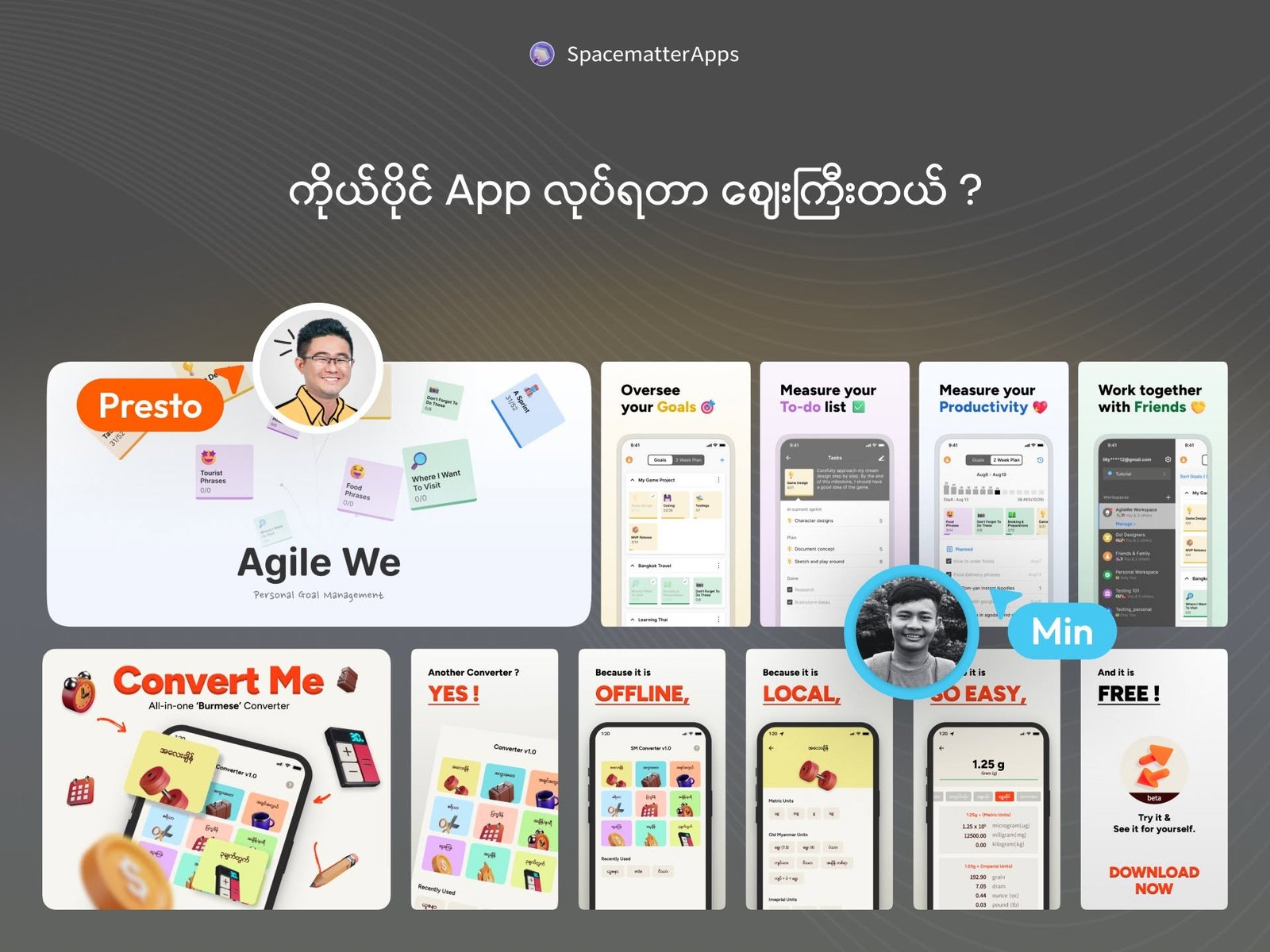
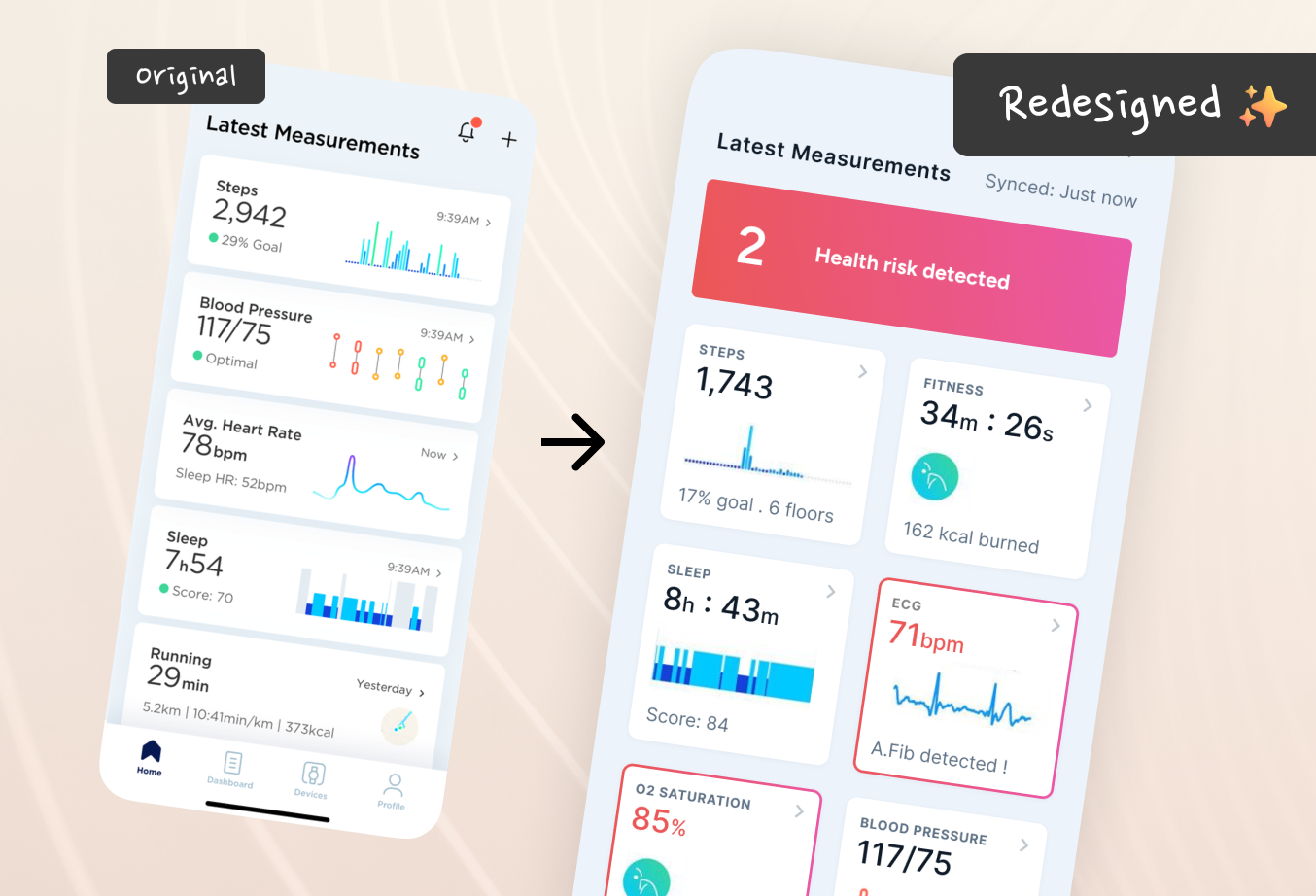
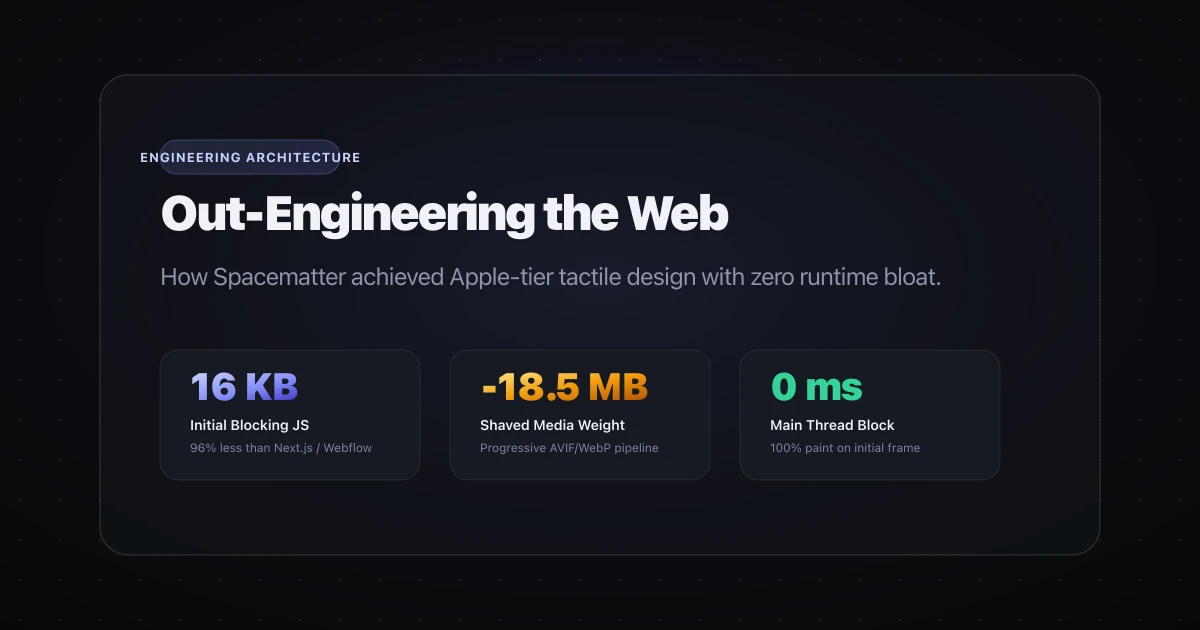
AI tools can assemble a working prototype in a single night. But turning that initial dopamine rush into a sustainable, scalable software product demands an entirely different level of discipline.
The illusion of effortless software: AI generates code in seconds, but architecture, scaling, and intuition remain deeply human crafts.
1. My Girlfriend Made an App Faster Than I Did
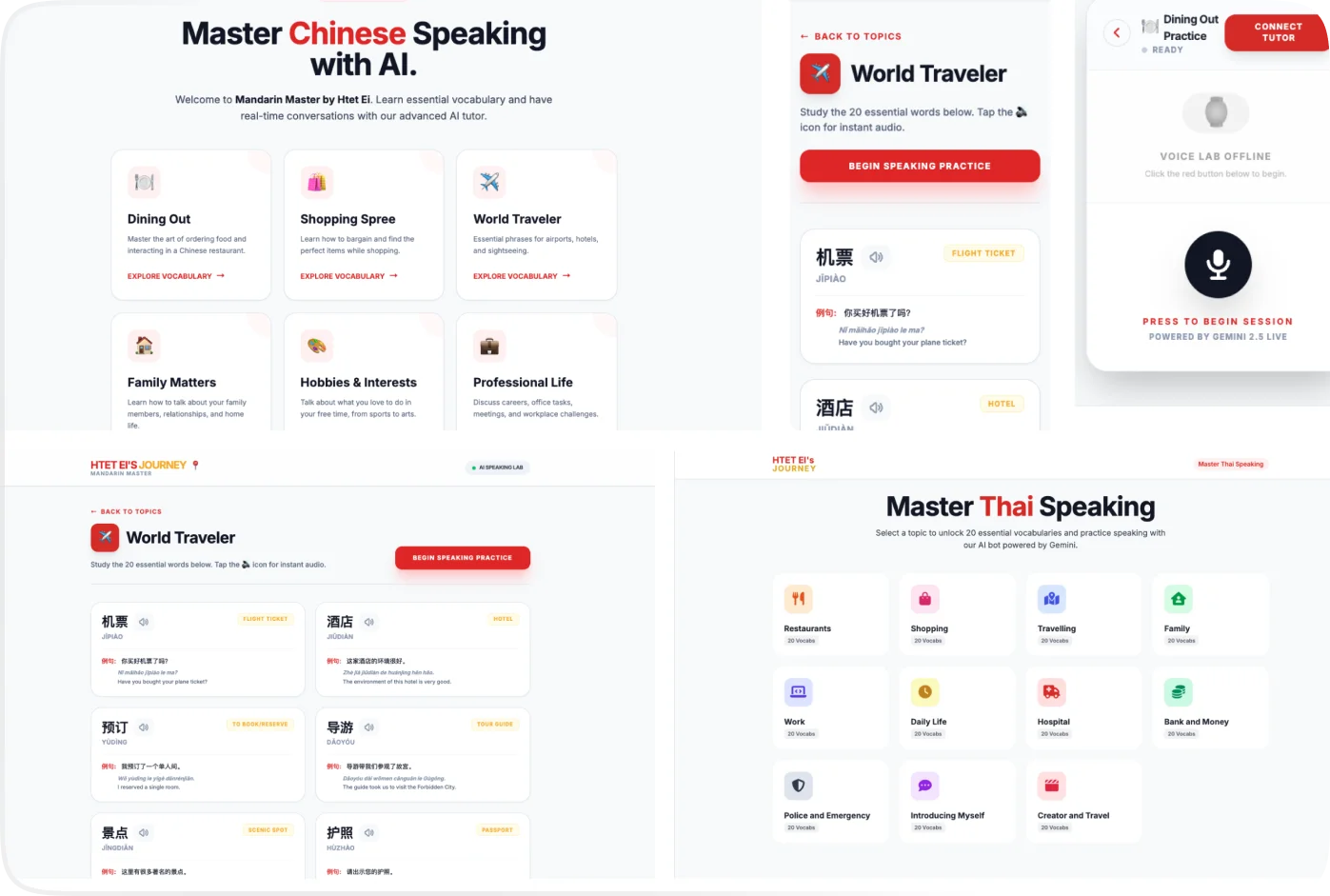
One morning in January 2026, I walked into the room and found my girlfriend practicing Chinese with what looked like a fully customized mobile application. Curious, I asked where she downloaded it. She smiled and told me she had built it herself the night before.
I had shown her the basics of Google AI Studio the previous evening. In less than 12 hours—with zero prior programming background and without even knowing what an API or JSON payload was—she had configured an interactive AI conversation practice tool tailored to her exact vocabulary exercises.
Figure 1.0: A functional Chinese and Thai conversational practice app built in a single night with zero prior programming knowledge.
When I began my journey in software over a decade ago, there were no shortcuts. Getting an ugly, barely functional prototype required months of painful grinding, reading dense documentation, and enduring more than 20 failed MVP experiments before I learned how product design and engineering truly intersect.
Yet here she was, leaping across that ten-year barrier in a single evening. Seeing an app you conceived running live in your hands is one of the most intoxicating, joyful moments anyone can experience. AI companies have unlocked a deep human desire: the thrill of creative agency.
But once the initial dopamine spike settles, reality sets in.
App Generation vs. Media Generation
When you prompt an AI to generate an illustration or render a video clip, that generation is a standalone artifact. Once it is rendered, it is yours forever. You do not need to keep paying a cloud provider every time someone glances at the JPEG.
Apps do not work that way. An app is a living system. It requires continuous database connectivity, authentication servers, third-party API tokens, operating system compatibility updates, and data persistence. The moment your app leaves the local sandbox, it enters the real commercial world—and that is where builders hit the four walls.
2. The Four Walls of AI App Generation
Wall 1: The free tier honeymoon ends the second your app encounters real production traffic.
Wall 1: Hidden Costs & Vendor Traps
Imagine you decide to open a restaurant. A friendly landlord steps forward and offers you a fully furnished kitchen, signature dishes, and professional waitstaff—completely free of charge.
When you only serve five close friends, everything feels magical. But the moment word spreads and fifty paying patrons walk through the door, the landlord announces new terms: because you are using their proprietary kitchen and staff, every plate now carries an escalating premium fee.
You realize too late that you could have rented a modest commercial space, hired your own team, and cooked your own recipes for a fraction of the cost. But your customers already associate your business with this exact venue. You are locked in. Modern AI platform tiers work on this exact playbook: frictionless entry, followed by steep usage-based billing when storage and API calls multiply.
Wall 2: Rescuing an un-modular codebase generated without architectural discipline is an engineer's worst nightmare.
Wall 2: Hard to Scale (The Piling-Clothes Problem)
There is one task professional software engineers universally dread: attempting to salvage an application constructed from un-modular, undocumented code.
AI models write code with superhuman speed. Because of that velocity, an LLM does not need to structure code for human readability unless you ruthlessly enforce architectural standards. It packs hundreds of lines of mixed database queries, UI components, and state management into monolithic files.
Worse, AI forgets. Think of a boutique clothing store. Instead of organizing apparel neatly by category and size, you hire an assistant who dumps every garment into a massive pile in the back room. When customers request an item, he darts into the pile and retrieves it in two seconds. It seems miraculous.
Then business triples. The pile balloons into a ten-foot mountain. The assistant starts losing track of where items are, mixes up sizes, and hands customers the wrong orders. Because the entire store depends on rummaging through an unstructured heap, a single misplaced item causes a cascading disaster. That is exactly what happens when you attempt to scale an AI-generated codebase without senior human architecture.
Engineering Reality: What AI 'Bad Code' Looks Like
Monolithic Bloat: AI frequently dumps 800 lines of frontend templates, SQL statements, and inline CSS into a single unstructured file rather than creating clean, testable service layers.
Deprecated Syntax: Because training sets encompass years of legacy code, models regularly hallucinate outdated lifecycle methods and deprecated libraries.
Context Hallucinations: When logic complexity exceeds context boundaries, AI invents variables, bypasses shared constants, and proudly presents broken code like an eager puppy.
3. The Time-Sink and the Progress-Void
Wall 3: The illusion of speed turns into endless cycles of arguing with a brainless genius.
Wall 3: The 'Brainless Genius' Time Sink
Ask anyone who has attempted to ship a polished, production-grade product using AI tools alone, and they will confess the same reality: it is an exhausting time sink. It feels like pair-programming with a brainless genius.
You spend ten minutes generating a complex backend routine, and then spend four hours trying to fix a missing closing parenthesis or an off-by-one array error. In the worst cases, the model applies a “burn the whole house down to find the needle” approach—rewriting functional design tokens, swapping color palettes, and breaking navigation routes just to patch a trivial bug.
Wall 4: When you let AI do all the thinking, your personal intuition hits an early plateau.
Wall 4: The Dangerous Progress-Void
The most insidious danger of over-relying on automated vibe-coding is not financial; it is cognitive. When human beings wrestle with difficult problems over months and years, we build subtle mental models, tactile intuition, and problem-solving resilience. That is how juniors mature into senior architects.
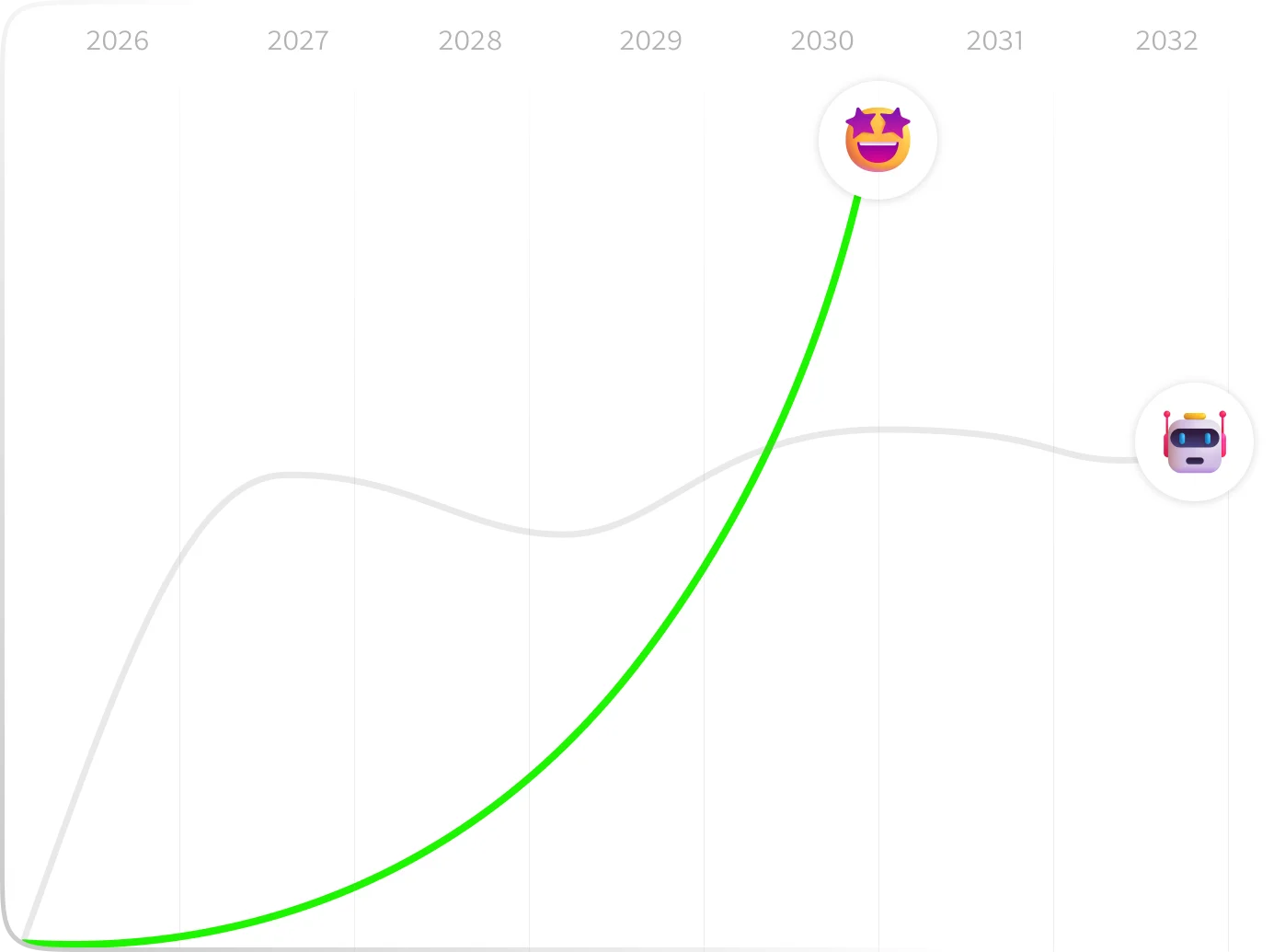
Figure 2.0: The Progress-Void. Relying on AI without understanding underlying mechanics leads to an early skill plateau, while disciplined builders continuously compound capability.
If you spend three years prompting an AI to generate code without understanding the underlying mechanics, you do not become a better engineer or product strategist—you simply become a better wrangler of sudden AI slips. In three years, the AI will be replaced by a newer model, while you have forfeited years of compounding human mastery.
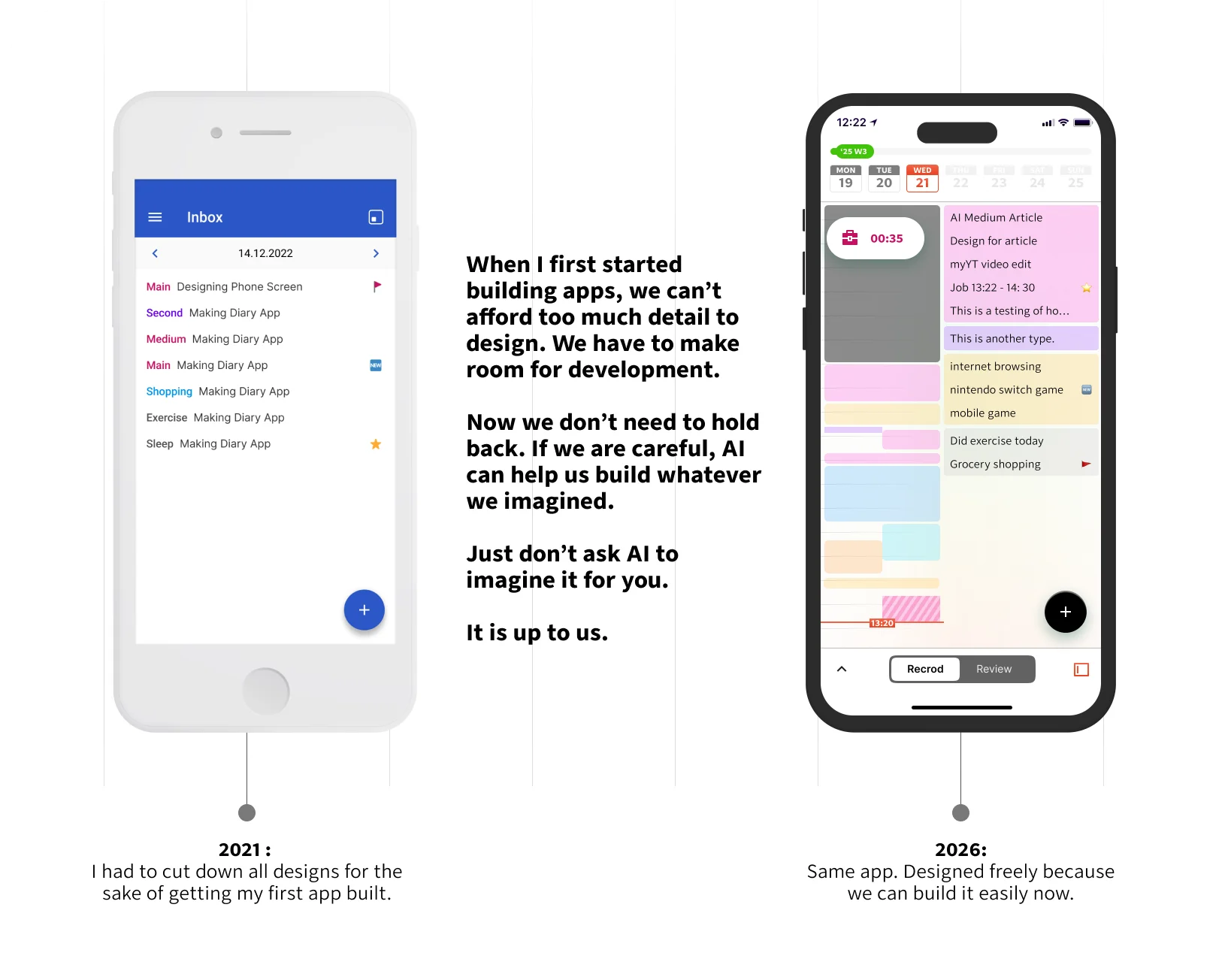
Figure 3.0: Craft compounds through deliberate human practice. 2021 early exploration versus 2026 senior production architecture.
AI is an extraordinary typewriter, an indefatigable assistant, and a rapid compiler. But it is not a visionary, it is not an architect, and it cannot care about your users. Thinking remains the irreplaceable human craft.
— Presto — Product Designer & Strategist
4. AI Is a Tool: Don't Be Lazy
AI has accelerated my personal design and engineering workflow by 70% to 80%. It allows small, disciplined teams to ship software at speeds that were unimaginable five years ago.
The answer is not to reject AI, but to reject mental laziness. Use AI to wipe out boilerplate code, write unit test permutations, and synthesize documentation. But retain total ownership over your data structures, your system boundaries, and your core business logic.
When you build an app that touches real human lives, the fun eventually stops and the responsibility begins. Treat your software with respect, plan intentionally, and build for durability.